Learn from the exit without slowing the crowd.
Design a post-event feedback pause point that respects egress, dispersal, accessibility, and venue safety requirements.
Read the guideThumbsUp gives stadium and event-venue teams a touchless way to invite feedback at a suitable gate, concourse, concession exit, or other approved pause point. The venue decides where a fan can stop without disrupting safety or flow.
For venue operations, fan-experience directors, facilities teams, and event operators
Test the point during a representative event condition with venue, security, accessibility, sponsor, and event owners involved.
Between two matchday moments
Fan reaches an approved fixed point
Step 1 for the venue pause point workflow
A free hand gives a brief gesture
Step 2 for the venue pause point workflow
Team reviews event, zone, and time context
Step 3 for the venue pause point workflow
Set one short service question.
More industry guides
Compare related service moments.
Design a post-event feedback pause point that respects egress, dispersal, accessibility, and venue safety requirements.
Read the guideMeasure the food-and-beverage moment at an approved concession pause point, then review venue observations by outlet, event, and time.
Read the guidePlan a safe fan-feedback pause point after stadium entry flow, with gate context and crowd-aware checks for venue operations teams.
Read the guideWhy event feedback needs crowd-aware placement
A prompt that fits a quiet concourse may obstruct a surge or disappear beside a full concessions queue. A venue pilot should map the fan journey and name the pause point before inviting feedback.
Gates, concourses, concessions, restrooms, and exits have different crowd and staffing conditions across events.
Food, drinks, bags, tickets, and phones can make a deliberate pause and free-hand check essential.
A score needs a defined device, zone, and event context. The venue team still investigates the queue or service condition behind it.
A venue pilot sequence
The most useful event signal comes from a fixed point that is visible, safe, approved, and tied to a clear operational question.
Start at a gate exit, concourse, concession exit, or other point where venue teams can safely invite a pause.
Label the device and operating context so a manager knows which fan journey the signal represents.
Run the setup with representative flow, full hands, lighting, accessibility, and weather conditions where relevant.
Compare the configured time, device, and event context with queue, staffing, and facilities records.
Deployment note: Do not invite a gesture in a moving crowd or place a device where it creates a trip, security, or egress concern. The venue must decide the safe pause point and the alternative feedback route.
Placement planning
A gate exit, post-concession area, or public concourse can each answer a different question. The venue should avoid implying that a moving fan has completed a reliable interaction.
From fan signal to venue question
The dashboard can organize the configured device and time context. The venue uses its event records and observations to understand what changed around the point.
Compare event blocks and time periods when the venue has a consistent pause point and question.
Use device and location labels to distinguish a gate, concourse, concession, or exit experience.
Review queue length, staffing, wayfinding, and facilities observations before assigning a cause.
Illustrative post-concession check
If post-concession scores vary by event, the operator reviews queue and staffing records for that point. The signal does not automatically infer a zone cause, POS event, or crowd condition.
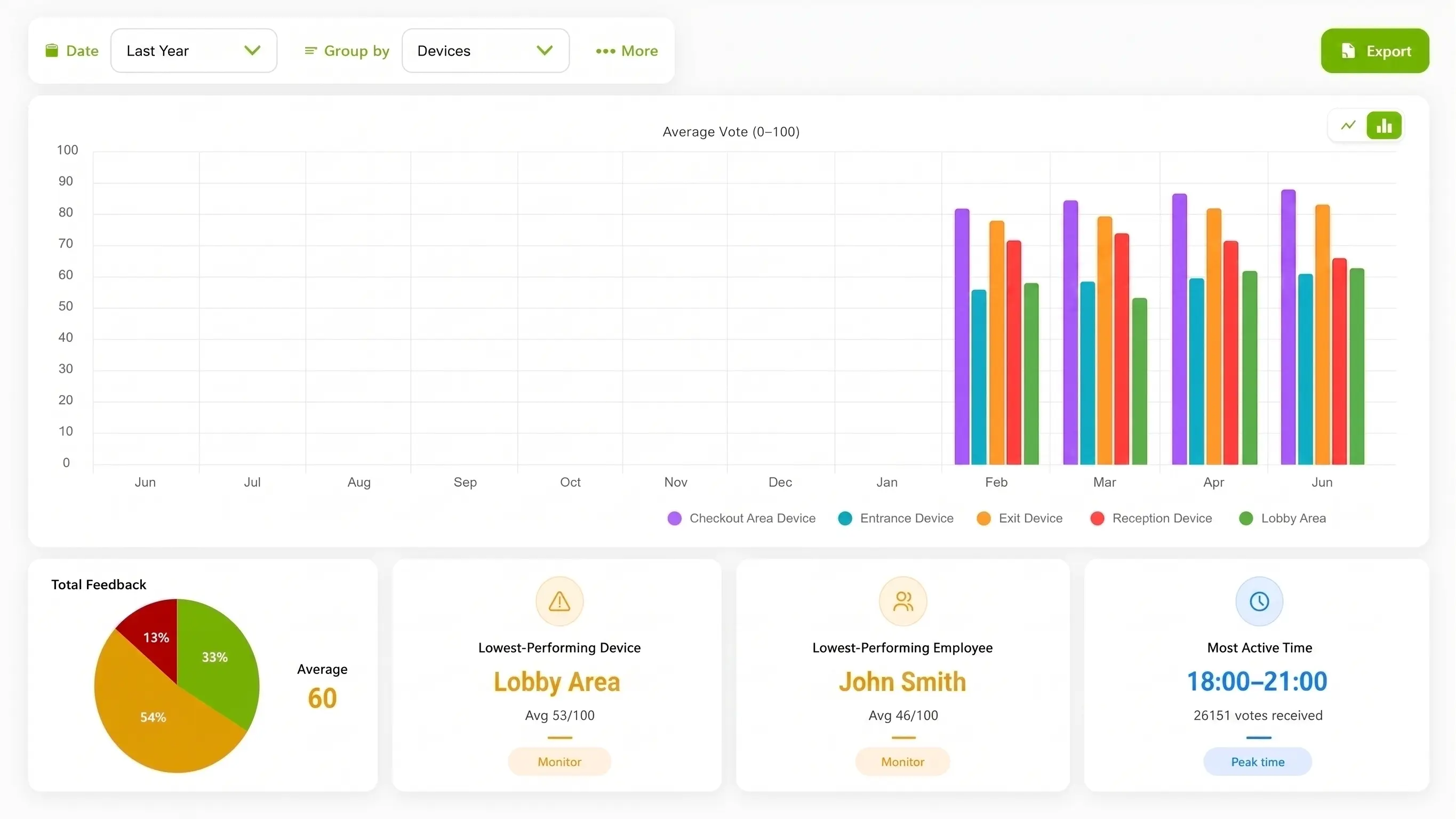
Illustration of configured review.
Choose the method for matchday
Post-event surveys and event platforms may collect richer detail. A venue prompt is for the brief moment where a fan can safely pause and offer a simple signal.
| Consideration | ThumbsUp | QR or phone survey | Shared kiosk |
|---|---|---|---|
| Customer action | Give a brief gesture at an approved, fixed venue point. | Open a phone survey or scan a code during or after the event. | Use a shared kiosk where the venue has approved the queue and cleaning flow. |
| Setup question | Check camera view, distance, light, and pause. | Open the code and complete the form. | Reach the shared screen at the moment. |
| Manager view | Review device, location, time, and context. | Review fields from the survey workflow. | Review fields from the kiosk workflow. |
Evidence for rollout planning
A venue-approved photo or clearly identified diagram can help a team evaluate crowd direction, security boundaries, and the deliberate pause point. A captioned demonstration should avoid identifiable fans and show only an approved or staged interaction.
Venue and event boundary
A stadium pilot does not imply live crowd analytics, POS integration, sponsor approval, or an event-wide sample. Define the fixed point, event context, rights, accessibility, and operating owner before publishing a result.
Read the relevant product guidanceBuying questions
The event calendar and physical flow should shape the pilot plan.
Questions before the pilot
Match setup to the service moment.
A venue can test a compatible camera-equipped Android tablet at an approved fixed point where fans can pause safely. A fan gives a supported gesture, and the venue reviews the configured device, location, time, and event context.
Consider a gate exit, post-concession area, or public concourse with room to pause and a clear free hand. The point must be approved for crowd flow, security, accessibility, egress, lighting, and weather.
They can compare configured devices and time or event labels when the venue records that context consistently. The comparison is a signal for operations review, not automatic event or crowd inference.
The venue should invite a gesture only at a deliberate pause point. Do not treat a moving-crowd interaction as a tested or reliable workflow without evidence from that exact setup.
Bring the event flow, venue approvals, and fan-experience question. We can map a safe fixed point and the operating checks needed before a matchday test.